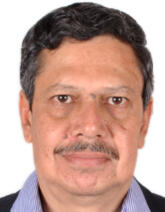
I bring over three decades of hands-on experience in heavy industrial engineering, commissioning, and operational risk management. Having spent a full career in high-stakes technical environments—navigating project deadlines, safety protocols, and complex cross-functional teams—I possess a deep, practical understanding of the real-world friction between engineering rigor and corporate management imperatives.Following my retirement from active engineering practice, I transitioned into qualitative organisational research to investigate the sociolinguistic dynamics of workplace decision-making. My scholarship examines the
deployment of 'Cant'—unassailable, performative corporate slogans and virtue traps used in public accounts to halt technical debate, enforce synthetic compliance, and silence empirical risk assessments. Using a two-stage grounded theory and radial interview methodology, my work deconstructs how technical professionals navigate 'The Hit' in live meetings and subsequently execute covert, backstage workarounds to preserve operational integrity.As a retired veteran practitioner, I occupy an 'insider-outsider' positionality that uniquely informs my inquiry. Unbound by internal corporate hierarchies, career promotion anxieties, or organizational politics, I offer complete critical distance while maintaining authentic, peer-to-peer credibility with active engineers and managers. This shared technical background allows me to build rapid intersubjective trust, enabling participants to move past sanitised 'public accounts' and share candid, reflective 'private accounts' of organisational life.
Research Background
Knowledge workers and skilled professionals—including engineers, doctors, and nurses—operate within complex organisational environments shaped by distinct institutional cultures, formal hierarchies, and operational demands. Within these settings, key decisions regarding workloads, risk management, and clinical or technical interventions are mediated through institutional discourse.During organisational 'crunch' moments, institutional 'sacred values' are sometimes wielded strategically to enforce compliance over professional expertise. This leaves skilled practitioners facing acute cognitive and ethical disorientation as they attempt to decode the true intent behind official rhetoric, triggering complex decision dilemmas in practice.Research Purpose
The primary objective of this study is to explore, describe, and analyze how skilled professionals navigate the tensions between institutional rhetoric and workplace reality. This inquiry seeks to:• Examine Lived Experiences: Understand how professionals interpret institutional language, demands, and "sacred values" in their everyday working contexts.
• Unpack Organizational Discourse: Identify how official directives and compliance demands influence decision-making and professional autonomy.
• Give Voice to Workplace Realities: Provide a confidential, transparent platform for knowledge workers to share their authentic accounts of workplace pressure, resistance, and negotiation.Research Methodology
This study adopts a social constructivist and interpretivist qualitative framework, anchored in symbolic interactionism and discourse analysis:• Contextual & Naturalistic Inquiry: Research is conducted within the natural social settings where professionals work, ensuring that accounts are analysed within their specific institutional contexts.
• In-Depth Qualitative Interviews: We utilise open-ended, active interviewing to explore how participants construct meaning from their experiences, putting workplace actions into clear context.
• Collaborative Knowledge Construction: Participants are treated as active co-constructors of knowledge rather than passive sources of data. The research process prioritises participant equity, confidentiality, and mutual respect, ensuring stories are represented authentically and without institutional bias.
Participant Safeguards & Research EthicsOur study operates under a strict, non-negotiable commitment to participant protection, voluntary consent, and total identity disguise. We recognise that discussing workplace pressures requires complete psychological safety and independence from institutional oversight.Key Ethical Safeguards & Guarantees:• Strictly Voluntary & Unconditional Withdrawal: Your participation is entirely independent of your employer, union, regulatory agency, or licensing body. You may decline to answer any question, pause recording at any time, or withdraw your data prior to publication synthesis without consequence.• Complete Anonymization & Disguise Protocols: Real names of individuals, facilities, projects, specific machinery, software systems, and locations are permanently replaced with fictional pseudonyms upon transcription. Technical specs are generalized to prevent any deductive identification by industry insiders.• Explicit Non-Audit Commitment: This research is designed solely to investigate organizational speech acts, meeting mechanics, and decision pressures. It is not a job performance evaluation, clinical audit, or workplace investigation.• AES-256 Encrypted Security: Raw audio files and un-anonymized records are stored in encrypted, air-gapped containers accessible solely by the principal investigator. Audio files are permanently destroyed following transcript verification.
Get in TouchWhether you are a skilled professional interested in participating in our study, a fellow scholar, or an institutional collaborator, we welcome your inquiries and dialogue.For Potential Participants:
Reaching out to explore study participation is entirely confidential and carries no obligation. Initial inquiries do not constitute consent, and your identity or workplace affiliation will never be shared.Contact Details:
• Email: tvbalaresearch.org
[email protected] (Alt)
• Mob: 91 9448350514
• WhatsApp: 91 9448350514
• ORCID iD: 0009-0007-6547-621X